Understanding FDA Fiber Claims
by Maynard Go | 5 min read | Regulatory | Fiber
What Qualifies as “High Fiber”?
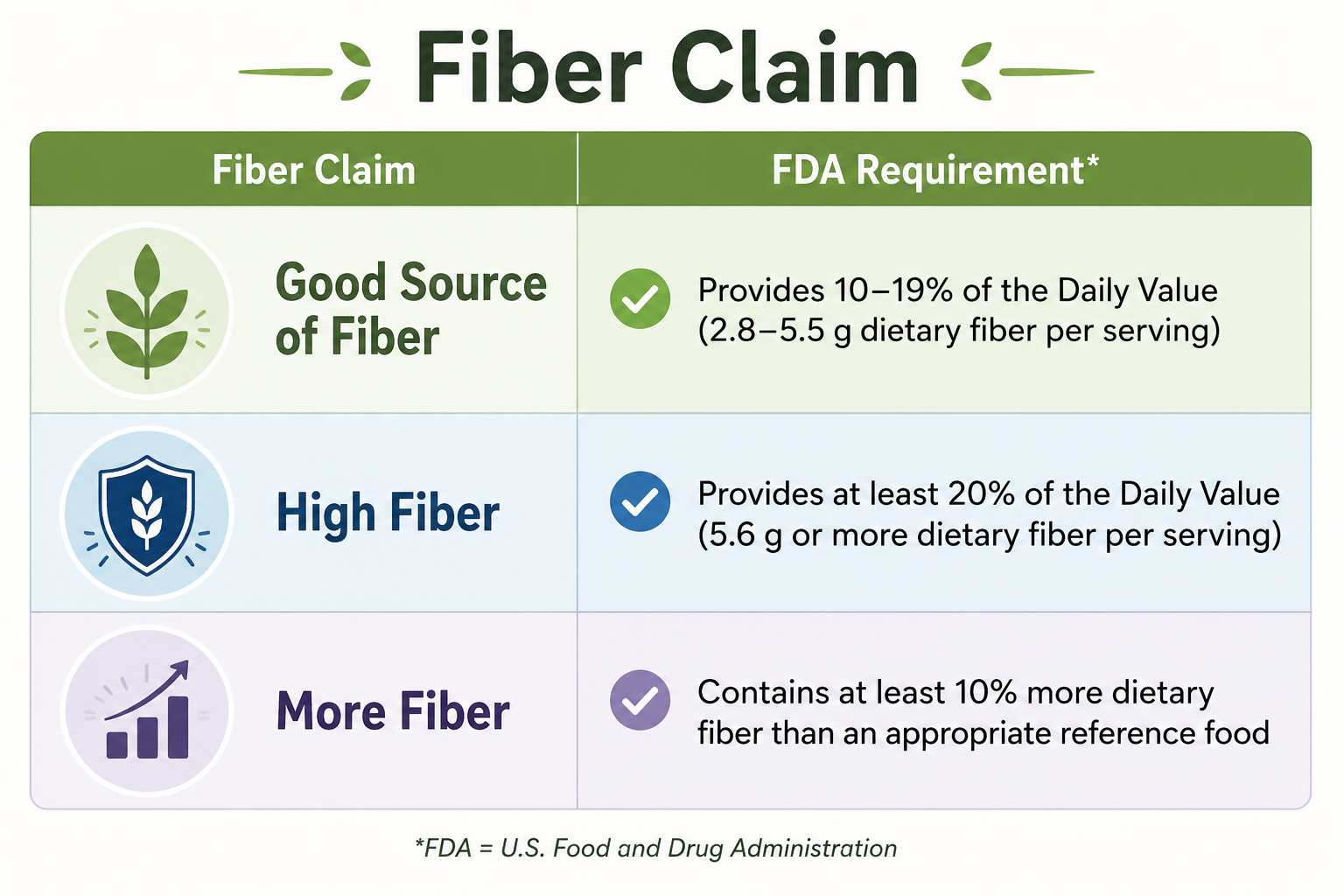
As consumers continue to seek foods that support digestive health, satiety, and overall wellness, dietary fiber has become one of the most desirable nutrients on product labels. However, making a fiber content claim involves more than simply adding fiber to a formulation. The FDA has established specific requirements that determine when products may be labeled as a “Good Source of Fiber” or “High in Fiber.”
Understanding these requirements early in product development can help manufacturers formulate products that meet both nutritional goals and regulatory requirements.
FDA Fiber Claim Requirements
The FDA bases fiber claims on the amount of dietary fiber provided in a serving, expressed as a percentage of the Daily Value (DV). The current Daily Value for dietary fiber is 28 grams for adults and children four years of age and older.
Not All Fibers Qualify
One of the most important distinctions in FDA labeling is that not every fiber ingredient automatically qualifies as dietary fiber on the Nutrition Facts Panel.
The FDA defines dietary fiber as:
- Naturally occurring, intrinsic, and intact fibers found in plants, or
- Isolated or synthetic non-digestible carbohydrates that the FDA has determined provide a demonstrated physiological benefit to human health.
For isolated or manufactured fiber ingredients, manufacturers must ensure the ingredient is recognized by the FDA as an approved dietary fiber before it can be included in the dietary fiber declaration on the Nutrition Facts Panel.
Why Serving Size Matters
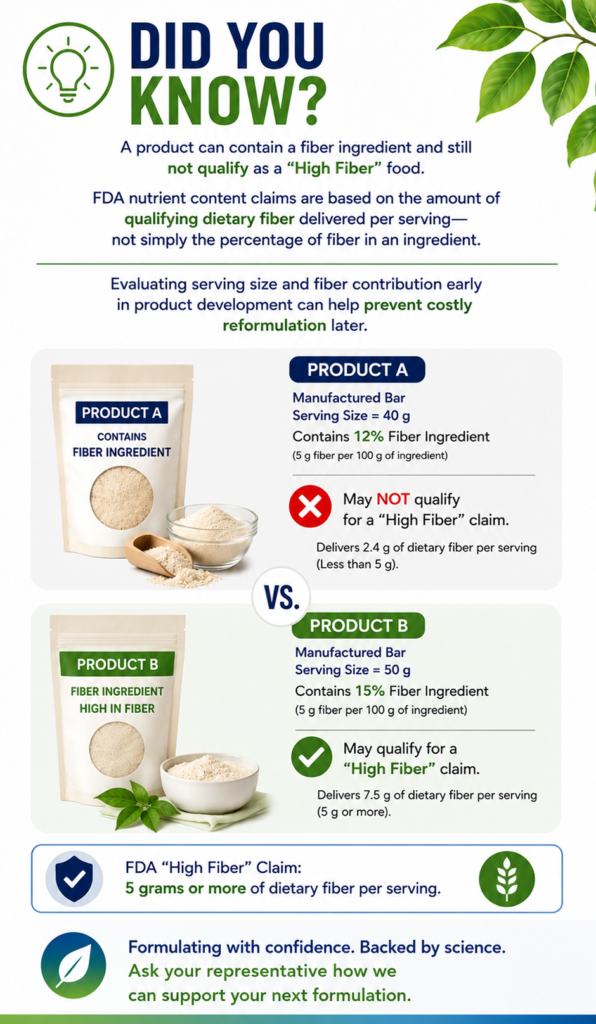
Fiber claims are based on the amount of qualifying dietary fiber contained in a product’s Reference Amount Customarily Consumed (RACC) rather than simply the percentage of fiber in the ingredient.
For example, a formulation may contain a high-fiber ingredient, but if the serving size is too small, the finished product may not provide enough dietary fiber to qualify for a “Good Source” or “High Fiber” claim.
Evaluating nutrient claims during formulation helps prevent unexpected labeling challenges later in product development.
Formulation Considerations
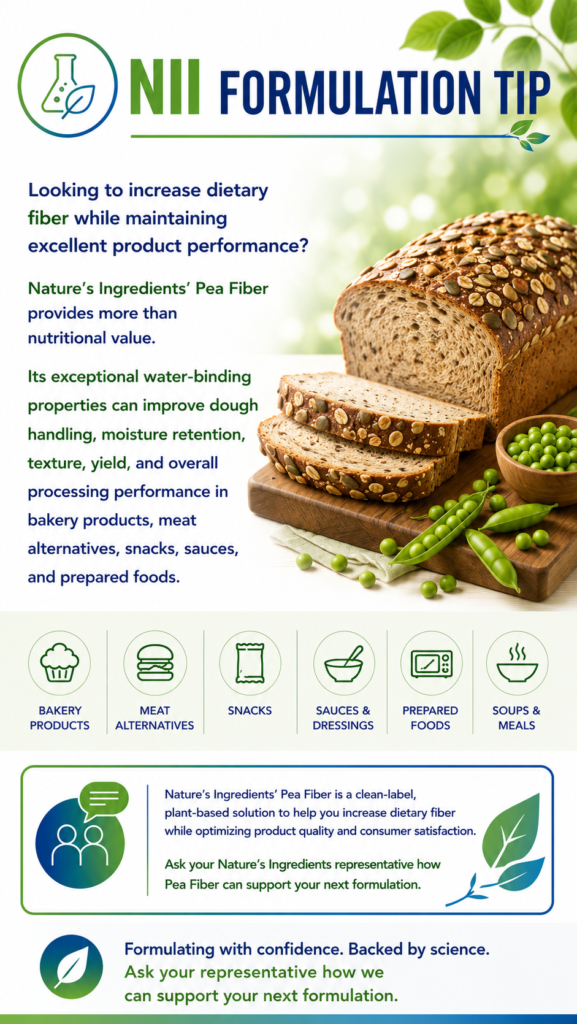
Successfully developing high-fiber products requires balancing regulatory compliance with product performance.
Adding fiber can influence:
- Texture and mouthfeel
- Water absorption
- Product handling and machinability
- Viscosity
- Flavor
- Shelf life
- Finished product yield
Selecting the appropriate fiber source depends on both the desired nutritional claim and the functional requirements of the finished product.
At Nature’s Ingredients, we work with manufacturers to identify fiber ingredients that support regulatory objectives while delivering the functionality required for successful commercial production.
Formulation Insight
Achieving a fiber claim involves more than simply increasing fiber content. Serving size, ingredient selection, FDA-recognized dietary fiber status, and finished product performance all influence whether a product qualifies for a nutrient content claim. Evaluating these factors early in formulation can streamline product development and help avoid costly reformulation.