Understanding Protein Claims
by Maynard Go | 5 min read | Regulatory | Protein
What Qualifies as “High Protein”?
Consumers are increasingly seeking foods and beverages that deliver meaningful amounts of protein, making protein content claims an important marketing tool. However, under U.S. FDA regulations, simply adding protein to a formulation is not enough. Products must meet specific nutritional and protein quality requirements before claims such as “Good Source of Protein” or “High in Protein” can appear on a product label.
FDA Protein Claim Requirements
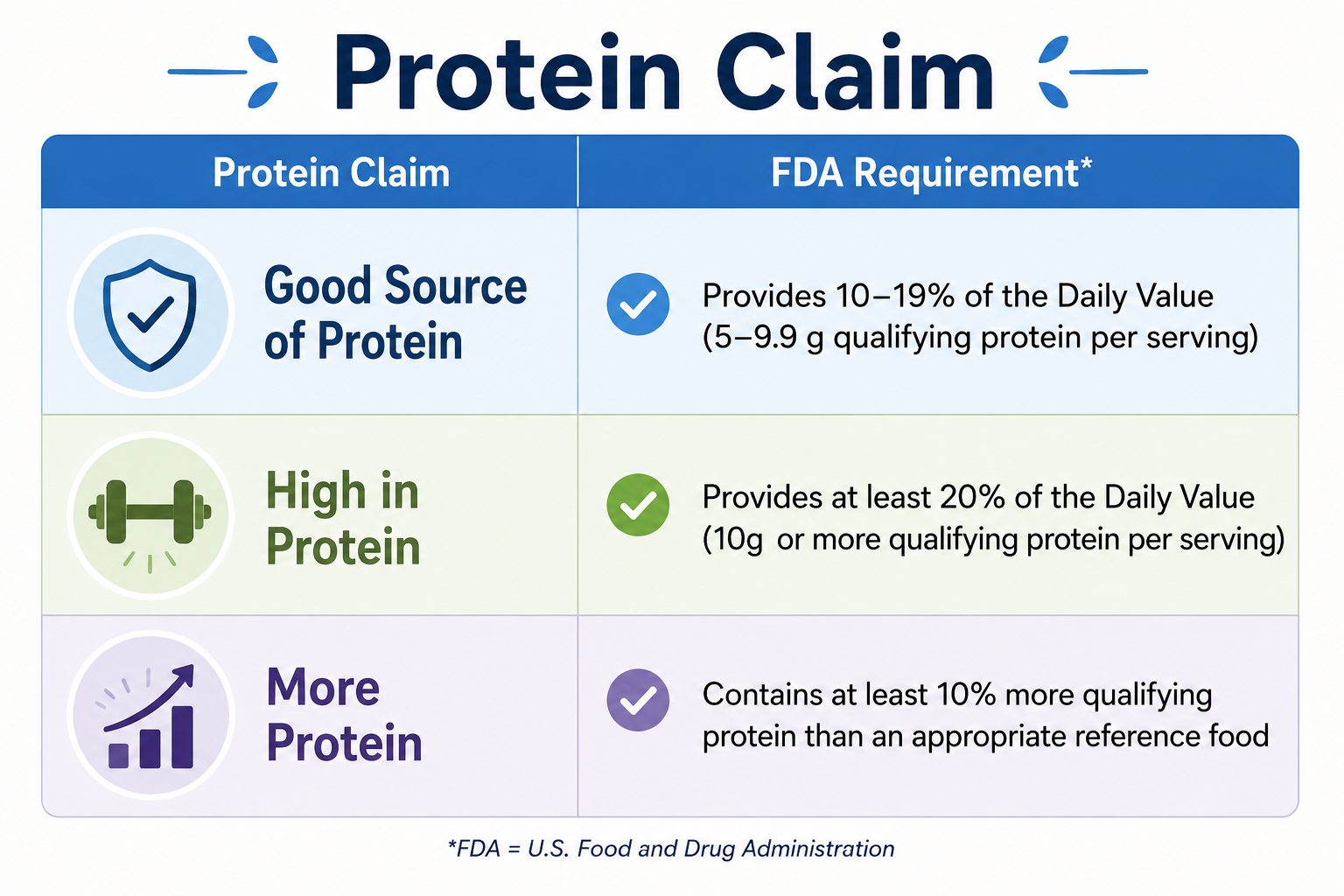
The FDA bases protein content claims on the amount of qualifying protein provided in a serving, expressed as a percentage of the Daily Value (DV), which is currently 50 grams for adults and children four years of age and older.
A finished product may qualify for the following claims:
Why Protein Quality Matters
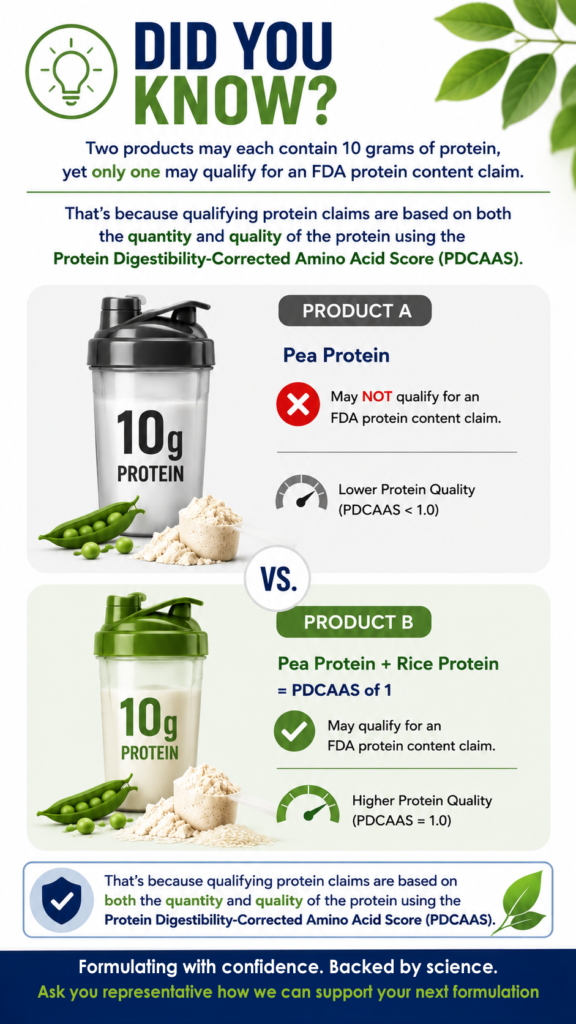
Unlike many nutrients, FDA protein claims are based on both the quantity and quality of the protein. To determine whether a product qualifies, the FDA uses the Protein Digestibility-Corrected Amino Acid Score (PDCAAS), which evaluates:
- Essential amino acid composition
- Protein digestibility
- Overall biological quality
The protein content declared on the Nutrition Facts Panel is multiplied by the protein’s PDCAAS value to determine the amount of qualifying protein that counts toward an FDA protein claim.
This distinction is particularly important for plant-based proteins. While many plant proteins contain significant amounts of protein, their PDCAAS values may reduce the amount of protein that qualifies for nutrient content claims.
Protein Claims vs. Total Protein
It’s important to distinguish between protein content claims and total protein declared on the label. Manufacturers may state the total grams of plant protein contained in a serving (for example, “20 grams of plant protein”), even if that amount is not adjusted for PDCAAS. However, FDA-regulated nutrient content claims such as “Good Source of Protein” and “High in Protein” must be based on the corrected, PDCAAS-adjusted protein value.
Formulation Considerations
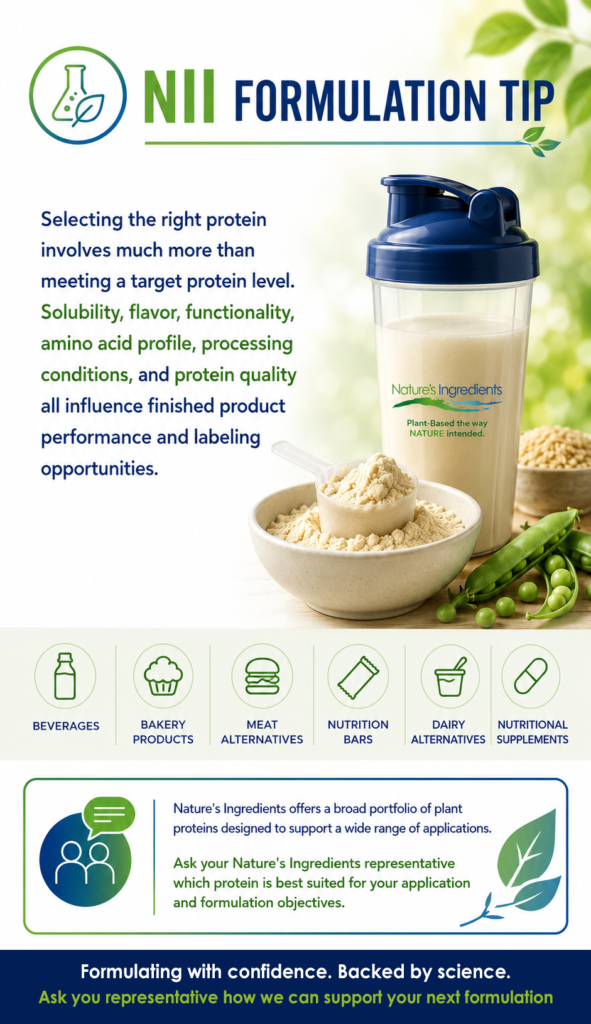
Developing products that qualify for protein claims often requires more than simply increasing protein levels. Ingredient selection, protein quality, amino acid profile, digestibility, serving size, and the product’s final formulation all influence whether a claim can be made.
At Nature’s Ingredients, we work with manufacturers to select functional plant proteins that help achieve nutritional targets while supporting taste, texture, processing performance, and label compliance.